Why Withdrawal Testing Is the Most Important Part of Any Crypto Review
By Danny Allan
Founder & lead analyst, CryptoWatchdog · former Complaints Manager at Crypto.com
13 April 2026· Updated 18 June 2026
The short answer
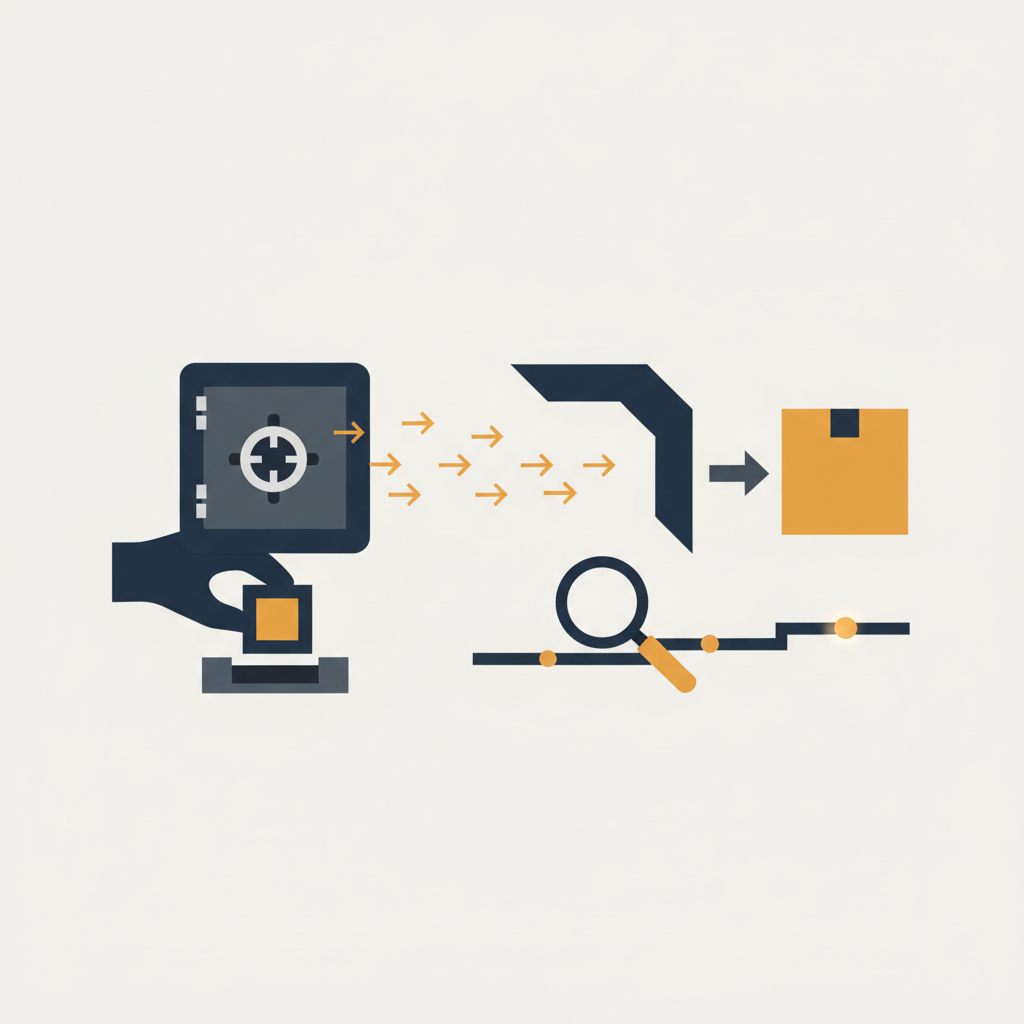
A balance on a screen is not your money. It becomes your money the moment you successfully move it off the platform and into a wallet or account you control. Until then it's a number, and numbers are cheap.
That's why a withdrawal test is the single most important check in any honest crypto review, and why we run one on every platform we assess at CryptoWatchdog. Deposits are designed to be easy everywhere, because every platform wants your money in. Withdrawals are where scams, insolvent firms, and badly run businesses all fail in the same way: the exit door is locked.
This guide explains why withdrawal testing matters, walks through real cases where platforms blocked withdrawals (some outright fraud, some collapsed firms that started out legitimate), and gives you a step-by-step process to test any platform yourself before you risk meaningful capital. None of it is complicated. That's rather the point.
Affiliate disclosure: some links in this article are affiliate links. CryptoWatchdog may earn a commission at no extra cost to you. It never influences our ratings or our methodology. We test the withdrawal whether or not a platform pays us anything.
TL;DR
- A positive balance means nothing until you've withdrawn it to a wallet or exchange you control. Paper gains are not real gains.
- The most reliable way to vet a new exchange, bot, or yield platform is a small test withdrawal before you deposit serious money.
- Scam platforms make deposits frictionless and withdrawals impossible, using fake "verification," surprise "taxes," and convenient "technical glitches."
- Even firms that started out operational, including Mt. Gox, Celsius, Voyager, and FTX, ended up failing because they couldn't honour withdrawals.
- A refused, delayed, or newly-taxed withdrawal is the number-one red flag in crypto. Treat it as a stop sign, not a hurdle to clear.
The illusion of profit: paper gains versus real money
Early in any bull market, platforms promising astonishing returns turn up everywhere at once. They tend to share one feature: a slick dashboard showing your balance climbing fast. That climbing number is the product. It's engineered to make you feel clever and rich, and to convince you to deposit more.
A number on a website is just a row in a database. It has no real-world value until you can move it and spend it somewhere else. Someone has to be willing and able to pay it out, and a surprising number of platforms are neither.
Think of it like a casino that lets you win all night at the table but keeps no cash in the back to pay out your chips. The game feels real. The payout doesn't exist. The whole experience is built to keep you playing, not to let you leave with anything.
The pattern shows up again and again:
- Squid Game token (SQUID, 2021): the contract let people buy in but blocked almost everyone from selling. The chart went vertical, then collapsed to near zero once the developers pulled the liquidity and walked away with it.
- Classic high-yield Ponzis: users watch a balance grow daily on a lending dashboard, get nudged to reinvest and recruit friends, and find the withdrawal button is the first thing disabled when the scheme runs out of fresh deposits.
Any "review" that doesn't verify the exit door is just reviewing the decor in the lobby. That's why our methodology, which you can see in how we test crypto trading bots and platforms and the same evidence-led approach we apply everywhere, always ends at a real withdrawal that actually lands.
Why withdrawal testing sits at the centre of our methodology
When we review a platform, we look at fees, custody, regulation, transparency, and support. All of it matters, and we don't skip any of it. But every one of those checks is downstream of a single question: can you actually get your money out?
A platform can have a beautiful app, low advertised fees, and a wall of glowing testimonials, and still be a trap. The reverse is also true. No marketing claim, "trust score," or celebrity endorsement can stand in for one verified withdrawal landing back in your wallet. We've seen polished sites that were frauds and clunky ones that paid out without fuss.
So withdrawal testing isn't one check among many. It's the control test that validates everything else. If the withdrawal fails, nothing else about the platform matters, and we stop wasting your time and ours.
| Review signal | Why it matters | Why it is not enough on its own |
|---|---|---|
| Slick app / website | Lowers friction, builds confidence | Scam sites are often the most polished |
| High advertised returns | Attracts deposits | Returns mean nothing if you cannot withdraw |
| Positive testimonials | Social proof | Easily faked or paid for |
| Regulatory registration | Real accountability | Cloned firms fake it; check the regulator directly |
| Successful test withdrawal | Proves liquidity and intent to pay | This is the test that cannot be faked |
Easy to enter, impossible to leave: how scams trap your funds
Getting money into a scam platform is effortless. Getting it out is where the trouble starts. That asymmetry is the whole design, and once you've seen it you can't unsee it.
When you request a withdrawal, the excuses begin, and they're not random. They're scripted tactics meant to wear you down until you give up or, worse, deposit more in the hope of unlocking what you've already lost. Regulators and law enforcement describe the same patterns over and over. The US Federal Trade Commission warns that in investment scams, "the website looks legit, your balance is growing, but when you try to cash out, you can't," with platforms demanding fees or taxes first (FTC: how to avoid a cryptocurrency scam).
Common traps include:
- Endless verification. You're asked for ID, then a utility bill, then a selfie holding your ID and a handwritten note. Each document gets rejected for a trivial reason, which conveniently resets the clock and buys the operator more time.
- Advance-fee fraud. The platform says you must pay a "tax," "conversion fee," or "wallet activation fee" to release your withdrawal, and it can't come out of your existing balance. You have to deposit new funds. That money is also gone. The US Secret Service notes that in these schemes victims are told they "must pay a percentage in tax" before withdrawing, which simply extracts more money (US Secret Service: investment fraud and pig butchering).
- Sudden technical issues. The platform announces "unscheduled maintenance" the instant you try to withdraw, while deposits keep working perfectly. Funny how that timing works out.
- Surprise lock-ups. You're suddenly told your funds are subject to a 90-day staking period that was never in the terms you agreed to.
These tactics are everywhere in the less-regulated corners of the market. For live examples from our own desk, see our warnings on the CryptoMine Pro mining scam and the YieldMax AI "guaranteed return" scam. Both follow the deposit-easy, withdraw-impossible script almost to the letter, which tells you these aren't lone geniuses inventing new tricks. They're working from the same playbook.
Why the advance-fee "tax" is always a lie
If you remember one thing from this article, remember this: a legitimate platform never asks you to deposit new money to release money you already hold. Withdrawal fees, where they exist, come out of your balance and are disclosed up front. And no real tax authority is ever paid in crypto, directly, to the platform you're trying to leave. The moment you're asked to "pay tax to withdraw," the test is over. You have your answer, and it's a no.
When "legitimate" platforms fail: liquidity crises and bank runs
Withdrawal risk isn't limited to outright scams. Crypto's history is full of once-credible firms that imploded and took customer funds down with them. These businesses weren't designed as frauds from day one. Through mismanagement, hidden fraud, or reckless risk-taking, they became insolvent and couldn't honour withdrawals.
The shape of it is always the same. A rumour spreads, everyone rushes for the exit at once, and the platform freezes withdrawals because the assets simply aren't there to pay everyone back. A bank run, in other words, but without the deposit insurance.
| Platform | When withdrawals halted | What we know |
|---|---|---|
| Mt. Gox | February 2014 | Halted withdrawals before collapsing; hundreds of thousands of BTC lost. Creditor repayments dragged on for over a decade. |
| Celsius Network | 12 June 2022 | Froze withdrawals citing "extreme market conditions," then filed Chapter 11 on 13 July 2022. |
| Voyager Digital | July 2022 | Suspended withdrawals and trading days before filing for bankruptcy. |
| FTX | 8 November 2022 | Halted withdrawals amid a liquidity crisis; filed for bankruptcy on 11 November 2022. |
Celsius froze customer withdrawals on 12 June 2022, trapping billions in user assets, and filed for Chapter 11 bankruptcy a month later (CoinDesk: the fall of Celsius Network, a timeline). It later emerged from bankruptcy and began distributing funds to creditors, but holders had no access for a long, painful stretch in between. If your money is rent or your retirement, that gap isn't an inconvenience. It's a disaster.
FTX halted withdrawals on 8 November 2022 after a wave of redemptions exposed a multi-billion-dollar shortfall, then filed for bankruptcy three days later. As detailed in the Wikipedia summary of the FTX bankruptcy, customer funds had been improperly funnelled to its affiliated trading firm, Alameda Research. A US court later approved a reorganisation plan to repay customers, but only after a long, court-supervised process, and only because assets were eventually recovered. That recovery was the exception, not the rule.
The lesson is an uncomfortable one: even a withdrawal that works today is not a permanent guarantee. That's why withdrawal testing pairs naturally with leaving less of your money on any custodial platform in the first place, a theme we dig into in self-custody versus custodial wallets. The less you park somewhere, the less a freeze can hurt you.
How big is the problem? What the data shows
Withdrawal-blocking fraud is not a fringe issue, and we'd rather you saw the numbers than took our word for it. According to the FBI's Internet Crime Complaint Center (IC3) 2024 Annual Report, victims reported $9.3 billion in cryptocurrency-related losses in 2024, a 66% increase on the previous year, with cryptocurrency investment fraud alone accounting for $5.8 billion across more than 40,000 complaints (FBI IC3 2024 Annual Report, PDF).
A defining feature of these "pig butchering" investment scams is exactly the trap this article describes. Victims watch a fake balance grow, get encouraged to deposit more, and then can't withdraw, because the platform was never real to begin with. Blockchain analytics firm Chainalysis has tracked this category growing year on year as the operations get more sophisticated and better resourced (Chainalysis: 2024 pig butchering scam revenue).
The over-60 age group reported both the most complaints and the highest losses in the IC3 data. That's worth sitting with for a moment, because it's a reminder that anyone can be targeted, often the people who can least afford it, and that a simple test withdrawal is a defence available to absolutely everyone, regardless of how much they know about crypto.
The litmus test: a practical guide to withdrawal testing
Here's the process we use, adapted so you can run it yourself on any new exchange, bot, or yield platform. It takes a few days of waiting and almost no effort.
- Start small. Pick an amount you'd be genuinely comfortable losing entirely. £20, £50, or £100. That's your test capital. Never make your first deposit a large one, no matter how confident you feel.
- Deposit from a known-good source. Send your test capital from an account you already trust, for example a major regulated exchange such as Kraken, or from a hardware wallet like a Trezor or Ledger Nano X.
- Let it settle, then wait. You're not testing profitability here. You're testing the plumbing. Give it a day or two, and resist the urge to top up because the balance looks promising.
- Withdraw the full amount. Initiate a withdrawal for everything, back to the wallet or exchange it came from. Watch the process closely. Are the fees stated up front? Is the interface honest about what's happening?
- Read the result:
- Success: the funds arrive back in a reasonable time (minutes for many on-chain transfers, up to roughly a day for some centralised exchanges) with no surprise charges. That's a genuine green flag.
- Failure: you hit an error, a support agent gives you an excuse, or you're asked to pay a new fee or "tax." Treat your test capital as lost, stop, and don't deposit another penny. The £50 you've just spent has told you everything you needed to know.
A quick red-flag / green-flag checklist
| Green flags | Red flags |
|---|---|
| Withdrawal fees disclosed before you confirm | Fees or "taxes" revealed only at withdrawal |
| Funds arrive in a reasonable, predictable time | "Maintenance" appears exactly when you withdraw |
| Verification done once, sensibly, at sign-up | Endless, repeated ID requests that reset progress |
| Withdrawal address whitelisting and 2FA | Pressure to deposit more to "unlock" a withdrawal |
| Clear, checkable regulatory status | Requests to pay tax in crypto to the platform |
This costs very little and can save you from a loss that wipes you out. It's the most important step in any personal "is X safe?" assessment, and the one most people skip because the climbing balance feels like proof enough. It isn't.
Reduce the risk before you even test
Withdrawal testing is your front-line filter, but you can stack the odds further in your favour before you commit a penny:
- Verify regulation at the source. Don't trust a logo on the platform's own site. Anyone can paste a logo. Check the regulator's register directly. In the UK, the FCA maintains a public warning list of unauthorised and cloned firms.
- Choose where you deposit carefully. Our best crypto exchange UK 2026 guide ranks platforms by safety and regulation, not by who pays us the most commission.
- Keep long-term holdings in self-custody. Money you never leave on a platform can't be frozen by that platform. Compare your options in self-custody versus custodial wallets and our hardware wallet comparison.
- Understand what you actually own. This applies to newer products too. See our explainer on real-world asset tokenisation, where the question "can I redeem this for the underlying asset?" is the same test in a different outfit.
If you do want to use a particular exchange after passing your own test, our review pages cover the detail. You can read our full Kraken review or Bitget review before opening an account via Kraken or Bitget. And if you're buying a hardware wallet to hold funds in self-custody, get a genuine device direct from the maker, Ledger or Trezor, to avoid tampered second-hand units. (These are affiliate links, disclosed above. We still test withdrawals and rank by evidence regardless.)
Frequently asked questions
How much should I use for a test withdrawal? Use the smallest amount that clears the platform's minimum withdrawal threshold, and never more than you'd be comfortable losing entirely. For most people that's somewhere in the £20 to £100 range. The goal is to test the process, not to invest.
Is a successful withdrawal a guarantee the platform is safe? No. It's strong evidence that the platform is functioning and willing to pay out today, which rules out the most common scams. It doesn't protect you against future insolvency. As Celsius and FTX showed, a platform that paid out yesterday can freeze withdrawals tomorrow. Treat a passed test as necessary, not sufficient, and avoid leaving large balances parked on any custodial platform.
The platform says I need to pay a tax or fee before I can withdraw. Is that normal? No. This is the single clearest sign of a scam. Legitimate platforms deduct any withdrawal fee from your existing balance and disclose it up front. No genuine service requires you to deposit new money to release money you already hold, and no real tax authority is paid in crypto directly to a trading platform. If you see this, stop immediately.
My withdrawal is delayed. Does that automatically mean it's a scam? Not always. On-chain transactions can be slow during network congestion, and regulated exchanges sometimes apply security holds on new accounts or on large or unusual withdrawals. The warning signs are escalating excuses, demands for more money, repeated identity checks that reset, or support that goes quiet. A single delay with a clear, consistent explanation is a different thing from a moving target.
How do I test a platform that only supports staking or lock-up periods? Read the terms before depositing and confirm the exact unlock date and any conditions. Then deposit a small amount, wait for the shortest available lock-up to end, and withdraw. If the platform changes the rules, extends the lock-up, or introduces new conditions at withdrawal time, that's your red flag.
Should I just keep my crypto in self-custody and avoid this entirely? Self-custody removes counterparty and withdrawal risk, because no third party can freeze your funds, but it shifts the responsibility for security entirely onto you, including your seed-phrase backups. Many people use a hybrid approach: a regulated exchange for buying and selling, and a hardware wallet for long-term holdings. See self-custody versus custodial wallets for the trade-offs.
Where can I check if an exchange is properly regulated in the UK? Check the Financial Conduct Authority's register and its warning list of unauthorised firms directly on the FCA website. Never rely on claims or logos shown on the platform's own pages, since cloned firms routinely fake them.
What this comes down to
Everything about a crypto platform, the app, the fees, the testimonials, the returns, sits downstream of one question: can you get your money out? Scams and collapsed firms fail in the same place, at the exit door, which is why a real withdrawal is the only test that can't be faked.
So before you trust any platform with serious money, run the test yourself. Start small, deposit from a source you control, and withdraw the full amount back. If it works cleanly, you've got meaningful evidence. If it doesn't, you've just learned the most important thing about that platform for the price of a small, deliberate stake. That's a cheap lesson. The alternative usually isn't.
This article is general information, not financial advice. Always do your own research and only risk money you can afford to lose.
Disclaimer
This content is for informational purposes only and does not constitute financial advice. Always do your own research.
Related guides
CoinLedger Review 2026: The #1 Crypto Tax Software (Industry Leader, 92/100 Trust Score)
Our CoinLedger review for 2026. We connected a real multi-exchange portfolio, checked the security setup, and compared it to Koinly and CoinTracker. It scores 92/100 — here is what we found, and where it still falls short.
EducationPump-and-Dump Schemes: How to Spot the Crypto Scams That Will Empty Your Wallet
A crypto pump and dump inflates a token with hype, then the insiders sell into the rush and the price falls off a cliff. Here's how the trick works, the on-chain and social tells you can check yourself, and a plain checklist to keep your money out of it.
RegulationCrypto performance audits explained: the investor's guide
Crypto performance audits explained for investors: what a real audit checks, why proof of reserves falls short, and how to read a report before you trust your money to a platform.
WalletsOobit Review 2026: Pay With Crypto, and the Truth About That 10% Cashback
Oobit lets you spend crypto at Visa terminals and converts at the till, not before. The headline is 10% cashback. The reality is 2% for most people unless you hold OOB. Here's our honest, evidence-led Oobit review: how it works, the fees, who it suits, and what to check first.
SafetyWhy Avoid Risky Crypto Services: Protect Your Investments
Risky crypto services have cost ordinary investors billions. Here is how to spot the structural warning signs, what the QuadrigaCX and FTX collapses really teach us, and the checks to run before you trust any platform with your money.
EducationUnderstanding Crypto Trust Scores: How We Rate Platforms
One number, one colour, zero waffle. Here's exactly how we build a crypto Trust Score out of 100 — the green, orange and red alerts, the audit behind every rating, and how to read it before you part with a penny.