Oobit Review 2026: Pay With Crypto, and the Truth About That 10% Cashback

By Danny Allan
Founder & lead analyst, CryptoWatchdog · former Complaints Manager at Crypto.com
25 April 2026· Updated 17 June 2026
The pitch, and the part the ads skip
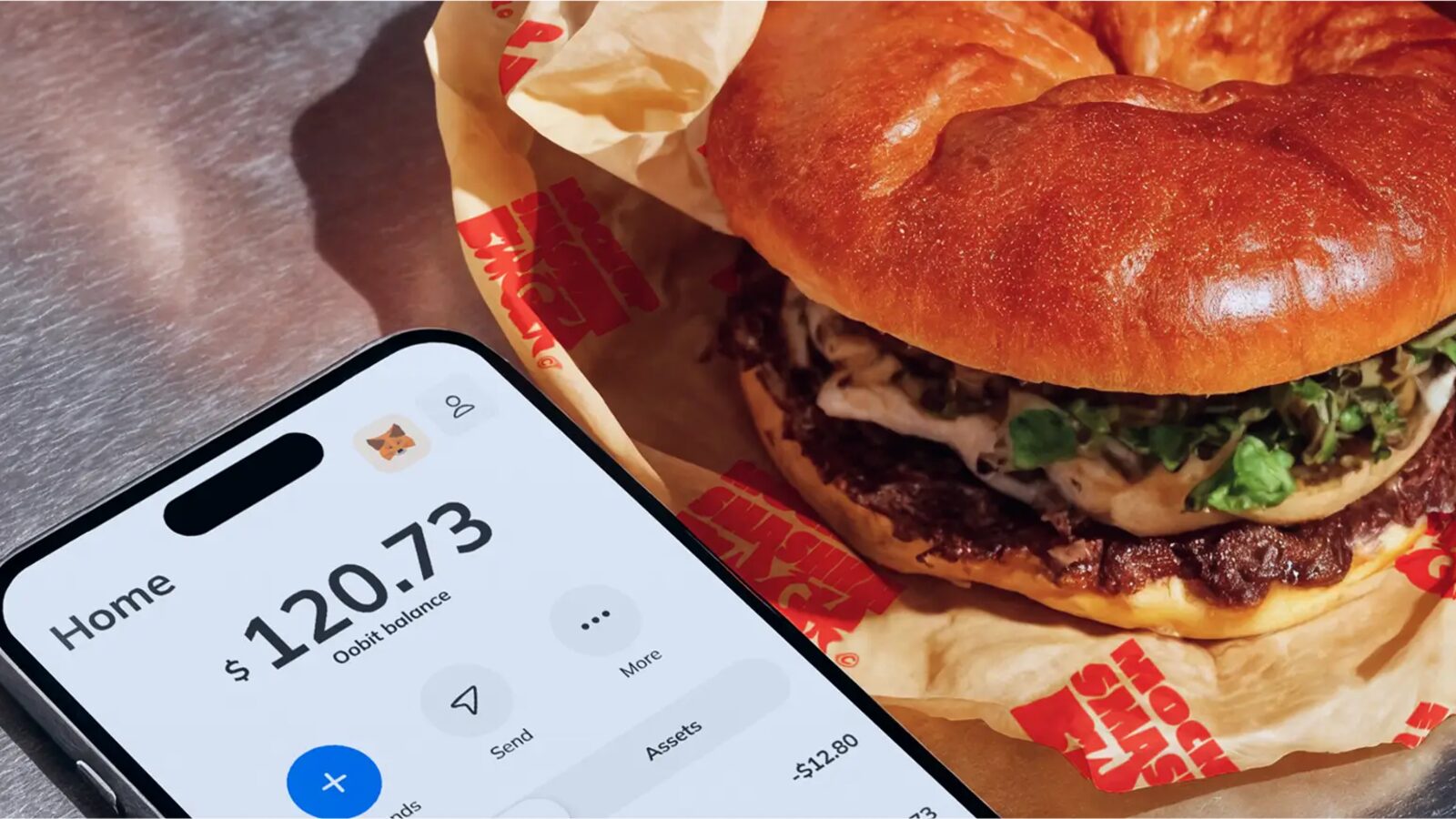
For years, "pay with crypto" mostly meant selling your coins first, waiting for the cash to land, then spending like normal. Oobit's idea is different, and genuinely clever: your crypto stays as crypto until the moment you tap to pay, and the conversion to local currency happens at the checkout rather than before it. The shop gets paid in pounds, euros or dollars and never has to think about blockchains.
That part is real, and it's the reason Oobit gets talked about. But the marketing leads with "up to 10% cashback," and if you stop reading there you'll get the wrong idea. For most people, most of the time, the number is 2%. There's also a fee the ads are quiet about. So this Oobit review does the boring, useful thing: it separates what Oobit does well from what it dresses up, and tells you who should actually bother.
We'll cover how the payment flow works, the real cashback tiers, the fees, custody, where it's available, and the honest verdict. No price predictions, no promises about returns, and a few things we'd want you to double-check before you deposit a penny.
What Oobit is, plainly
Oobit is a mobile crypto payments app. You hold or connect crypto, then tap your phone at a contactless Visa terminal the same way you'd use Apple Pay or Google Pay. Behind the scenes, your crypto is converted to fiat at that moment and the merchant is paid in their local currency.
The company was founded in 2017 and is headquartered in Singapore; its consumer app launched in 2022, according to the company's own newsroom and several startup-profile sources. In February 2024 it raised a $25 million Series A led by Tether, the issuer of the USDT stablecoin, with co-investors including CMCC Global's Titan Fund, 468 Capital and Solana co-founder Anatoly Yakovenko. That's documented by CoinDesk and Tether's own announcement.
The simplest way to think about it: Oobit isn't a card you load and forget. It's a payment rail with a tap-to-pay front end. The value sits in crypto right up to the till.
How the payment actually works
The mechanic is less complicated than most write-ups make it sound.
- Hold crypto inside Oobit, or connect your own external wallet through Oobit's DePay system.
- Tap your phone at any contactless Visa terminal.
- Oobit converts your crypto to fiat at the point of sale, at the live market rate.
- The merchant receives local currency and is none the wiser.
- Eligible cashback is credited to your balance.
The interesting engineering is in DePay, Oobit's settlement layer. According to Oobit's newsroom and independent coverage from Crypto.news, DePay performs just-in-time token swaps at the moment of authorisation across networks including Ethereum (ERC-20), Tron (TRC-20), BNB Chain, Solana and Polygon. There's no prefunding required when you use a connected wallet: you stay on-chain until the payment clears, and supported wallets include MetaMask, Phantom and Trust Wallet, among others.
The point-of-sale conversion is the genuine selling point. Many older crypto cards make you convert to fiat or a stablecoin at top-up, which means you sell early and sit in cash until you spend. Oobit lets you hold your position until the moment of purchase. Whether that's good or bad depends on which way the market moves, which nobody can tell you in advance. It's flexibility, not free money.
The cashback: what "up to 10%" really means
Here's the bit the headline glosses over. The "up to 10%" figure is real, but it's conditional, and for the average user the everyday rate is 2%.
Based on independent reviews and Oobit's own materials, the structure works roughly like this:
- Standard tier (2%): most users earn 2% cashback on eligible purchases, paid in USDT or OOB, with no minimum spend on the base tier.
- OOB Rewards tier (up to 10%): the higher rate is unlocked by holding OOB, Oobit's native token, and taking part in its rewards programme. Some coverage notes you can also swap into OOB right before checkout to access the top rate on that transaction.
- Fee discounts: paying with OOB can also cut transaction fees, with some sources citing discounts of up to 50%.
Two honest caveats. First, reaching 10% means taking on OOB, a volatile token whose price can fall. So the headline rate comes with exposure that the base 2% does not, and we'd treat any "10%" claim as the ceiling, not the norm. Second, rewards paid in USDT are genuinely useful because a stablecoin is easy to hold or sell; rewards paid in OOB are only worth what OOB is worth on the day. We can't predict that, and neither can anyone else.
For context, a typical fiat rewards card pays around 1–2% in points. Oobit's base 2% in stablecoins is competitive. The 10% is a different animal, and you should only chase it if you actively want OOB exposure for your own reasons.
The fee the ads don't lead with
A detail the original marketing tends to skip: card payments carry a 1% transaction fee, per multiple independent reviews and Oobit's own card materials. International purchases may also pick up foreign-exchange costs depending on the transaction.
That matters for the maths. On the standard tier, 2% cashback minus a 1% fee nets you closer to 1% in practice on an eligible spend. Still positive, still better than nothing, but a long way from the "10%" you might have walked in expecting. Account creation, crypto deposits and receiving payments are described as free, and there's no annual card fee, which is fair.
Oobit at a glance
| Feature | Detail | Our note |
|---|---|---|
| Conversion point | At checkout (point of sale) | The genuine differentiator |
| Base cashback | ~2%, in USDT or OOB | The number most people will actually get |
| Max cashback | Up to 10% via OOB Rewards | Conditional; requires OOB exposure |
| Card transaction fee | ~1% | Eats into the 2% base; factor it in |
| Custody | Custodial in-app, or non-custodial via DePay | Your choice changes the risk |
| Networks | ETH, Tron, BNB Chain, Solana, Polygon | Multi-chain through DePay |
| Acceptance | Anywhere Visa contactless works | Oobit markets 100M+ merchants; treat exact figures as marketing |
| Backing | $25M Series A led by Tether (Feb 2024) | Verifiable via CoinDesk and Tether |
| Founded | 2017, Singapore; app launched 2022 | Eight-plus years in the space |
Custody: the question that decides your risk
There are two ways to use Oobit, and they're not equal.
If you keep funds inside Oobit's app balance, Oobit is custodying your money, the same as any payment app. That's convenient, and it's also a trust assumption: you're relying on the company to hold and return your funds.
If you connect your own wallet through DePay, you keep self-custody and Oobit acts purely as the payment rail. No prefunding, no handing over your keys. If self-custody matters to you, that's the flow to use. Our crypto wallets guide walks through the custody trade-offs properly, and it's worth ten minutes before you decide which mode suits you.
Neither choice is "wrong." But they carry different risks, and you should pick deliberately rather than by accident.
Where you can actually use it
Availability is the part people forget to check, and it changes fast. Oobit launched wallet-native payments in the United States in December 2025 through a partnership with Bakkt, a publicly listed US company with money-transmitter licensing across all 50 states, as reported by The Block. In Europe it operates under MiCA via a StablR partnership, and coverage lists active markets including Brazil, South Korea, the Philippines and Thailand, with Argentina added in early 2026.
Regulation here is still moving, and what's available in one country may not be in the next. Check Oobit's own availability page for your jurisdiction before you sign up, because a great app you can't legally use is no use to you.
How it stacks up against a traditional crypto card
Most products sold as "crypto cards" convert everything to fiat or a stablecoin the moment you top up. From that point you're not really in crypto. Oobit's at-checkout conversion is a real design difference, and it's the thing that sets it apart.
| Typical crypto card | Oobit | |
|---|---|---|
| When crypto converts | At top-up (you sell early) | At point of sale |
| Cashback currency | Points or a proprietary token | USDT or OOB |
| Base cashback | Often 1–2% | ~2% |
| Headline max | Varies | Up to 10% (needs OOB) |
| External wallet support | Rare | Yes, via DePay |
| Card fee | Varies | ~1% per transaction |
If you want a like-for-like on the self-custody side, our Tangem Pay review covers a card built around a hardware wallet, which is a different way of solving the same "spend without giving up custody" problem. And our broader crypto cards guide explains the conversion spreads and tier games that catch people out across the whole category.
Who Oobit actually suits
It's a reasonable fit if any of these sound like you:
- You hold USDT, BTC or ETH and want to spend it without selling on an exchange first.
- You'd rather take cashback in a stablecoin than in points that expire.
- You want the option of self-custody at the till via DePay.
- You travel and want to spend crypto wherever Visa contactless works.
It's probably not for you if you only want to hold and never spend, if the 1% fee bothers you more than the 2% cashback rewards you, or if you live somewhere Oobit isn't yet licensed. And if you're only interested because of the "10%," be honest with yourself about whether you actually want to hold OOB. If you don't, the number that applies to you is 2%, minus the fee.
If you're still weighing up where to keep and move funds before you spend them, our guides to crypto exchanges and crypto wallets cover the custody and security questions that sit underneath all of this.
A note on those star ratings
Oobit's marketing cites high App Store and Google Play ratings across tens of thousands of reviews. App-store scores are a signal, not proof: they're easy to read and hard to verify line by line, and ratings shift over time. By all means look them up before you download, but weigh them alongside the things you can check independently, like the funding, the partnerships and the fee schedule, rather than treating a star count as the whole story.
Our verdict
Oobit does the headline thing well. Converting at the checkout, rather than at top-up, is a real advantage, and the DePay self-custody route is a genuine answer to the "I don't want to hand over my keys" objection. The Tether-led funding and the Bakkt-backed US launch give it more institutional weight than most apps in this corner.
The marketing oversells one number. For the average user the cashback is 2%, not 10%, and a 1% card fee trims that further. The 10% is real but conditional on holding a volatile token, which is a trade-off, not a freebie. Take Oobit for the payment experience and the stablecoin cashback, go in with the fee and the tiers clear in your head, choose your custody mode on purpose, and confirm it's available and licensed where you live. Do that and it's a solid tool. Walk in chasing the headline and you'll be slightly disappointed by the maths.
Frequently asked questions
Is Oobit's 10% cashback real? The 10% rate exists, but it's the top of a tiered system, not the standard rate. Most users earn around 2% on eligible purchases. Reaching 10% requires holding OOB, Oobit's own token, and joining its rewards programme, which means taking on OOB price exposure. Treat 10% as a conditional ceiling, not what you'll typically get.
Are there fees? Yes. Card payments carry roughly a 1% transaction fee, and international purchases may incur foreign-exchange costs. Account creation, deposits and receiving payments are described as free, with no annual card fee. Factor the 1% in when you compare it against the cashback you'll actually earn.
Is Oobit custodial or non-custodial? Both, depending on how you use it. Funds kept in the Oobit app balance are custodied by Oobit. If you connect your own wallet through DePay, you keep self-custody and Oobit only acts as the payment rail. Choose deliberately based on how much control you want.
Who's behind Oobit, and is it backed? Oobit was founded in 2017 and is based in Singapore. In February 2024 it raised a $25 million Series A led by Tether, with co-investors including CMCC Global's Titan Fund, 468 Capital and Solana co-founder Anatoly Yakovenko. The round is documented by CoinDesk and Tether's own announcement.
Where can I use Oobit? It works wherever Visa contactless is accepted, but availability of the app itself depends on your country. It launched in the US in late 2025 via Bakkt, operates in the EU under MiCA through a StablR partnership, and is live in markets including Brazil, South Korea, the Philippines, Thailand and Argentina. Check Oobit's official availability page for your jurisdiction first.
Should I hold OOB to get the higher cashback? Only if you'd want OOB exposure anyway. Chasing the higher tier means holding a volatile token whose price can fall, so the extra cashback comes with risk the base 2% doesn't carry. We don't make price predictions on OOB or any token; decide based on your own risk appetite, not the headline number.
Disclosure: some Oobit links in this article may be partner links. If you sign up through them, Crypto Watchdog may earn a referral commission at no extra cost to you. This doesn't influence our verdict — we only cover products we've independently researched. Read our full editorial policy and affiliate disclosure.
Disclaimer
This content is for informational purposes only and does not constitute financial advice. Always do your own research.
Related guides
TrustCard Review (2026): The 'Decentralized, No-KYC, 8% Cashback' Card — What's Real and What Isn't
TrustCard is pitched as the world's first self-custody, zero-KYC Visa card with up to 8% cashback. We dug in. The big claims don't survive contact with how regulated card networks actually work — here's our balanced, evidence-led TrustCard review.
WalletsTangem Pay Review 2026: A Self-Custody USDC Visa Card, Examined Honestly
Tangem Pay lets you spend USDC from a self-custody smart-contract account through a virtual Visa card. We walk through how it actually works, what it costs, where it's live, and the bits the marketing skips over.
WalletsTop crypto wallet features for safety and usability
A calm, evidence-led look at the crypto wallet features that actually protect your money in 2026 — what to insist on, what's marketing, and how to choose.
WalletsHardware Wallets in 2026: The Honest Buyer's Guide (Tested Devices, Real Risks, Real Numbers)
A plain-English hardware wallet buyers guide for 2026. We cover what these devices genuinely protect you from, the real theft numbers, who actually needs one, the setup mistakes that quietly wipe people out, and how the leading models compare on security, supported coins and price.
WalletsHot Wallets vs. Cold Storage: Your 2026 Guide to Not Losing Everything
Hot wallet vs cold storage, explained plainly. A hot wallet stays online and exposed; cold storage keeps your keys offline. Here is an evidence-led way to split your crypto so one mistake never costs you the lot.
WalletsYour Hardware Wallet Won't Save You: A 2026 Security Guide
A hardware wallet keeps your private keys offline, but it cannot stop you from approving a malicious contract, signing a phishing message, or pasting a poisoned address. Here is what these devices actually protect against, what they do not, and the habits that close the gap.