How Smart Contracts Work in Crypto Trading: The Complete Plain-English Guide

By Danny Allan
Founder & lead analyst, CryptoWatchdog · former Complaints Manager at Crypto.com
25 April 2026· Updated 18 June 2026
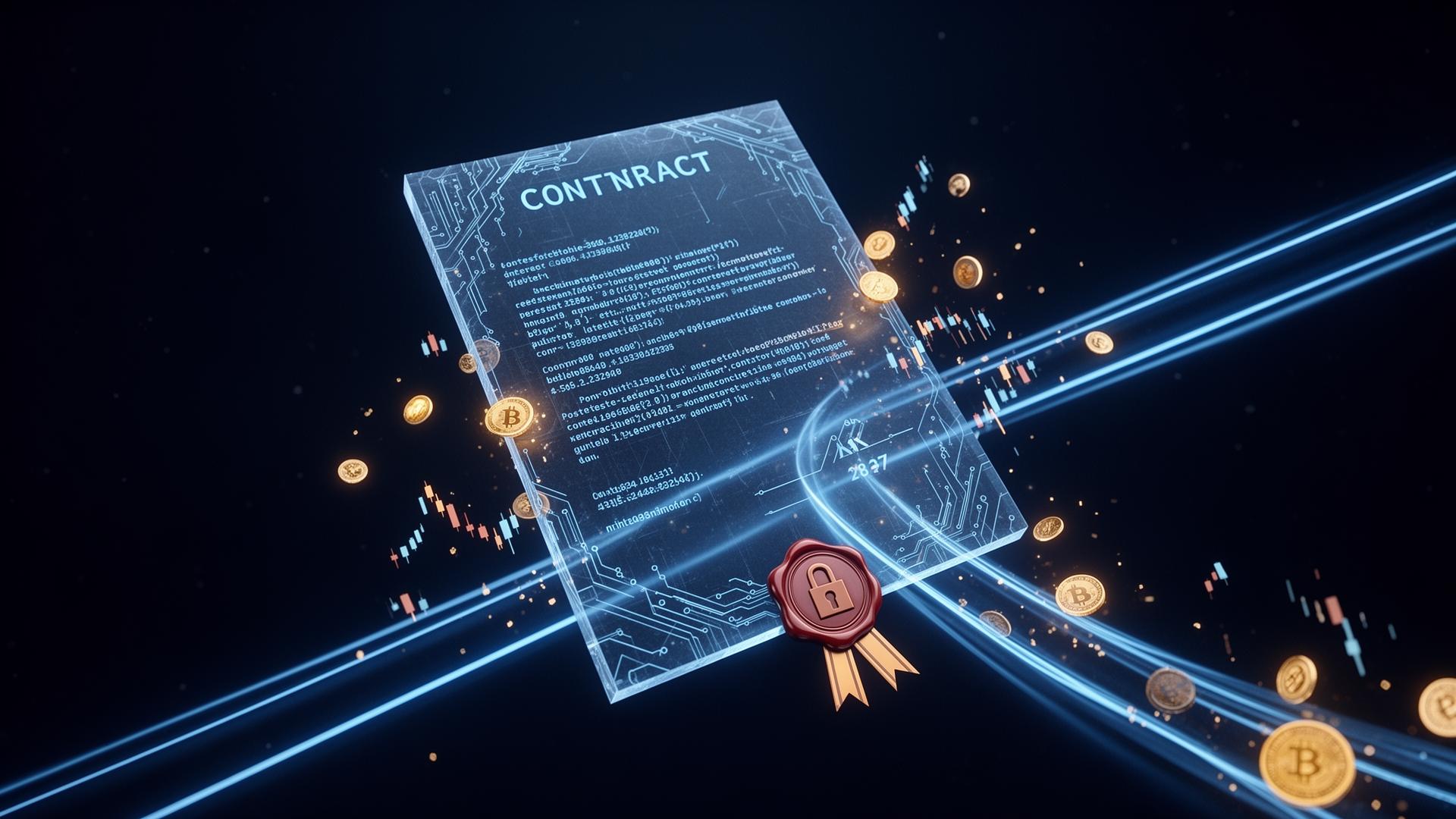
TL;DR: A smart contract is a small program that lives on a blockchain and runs by itself when the conditions you signed for are met. In trading, it's the thing that lets you swap, lend, stake, or run an AI bot without handing your money to a middleman. This guide explains how smart contracts work in plain English, what the real risks are, and how to read one before you sign.
The one-sentence definition
A smart contract is code on a blockchain that runs by itself once the rules you signed for are satisfied.
That's the whole idea. No lawyer. No clearing house. No "we'll process your withdrawal in 3–5 business days". The chain runs the code, the code does the thing, and the result is there for everyone to see.
For trading, that one property changes everything. So before you ever connect a wallet, it's worth understanding how smart contracts work — because that understanding is the difference between signing with your eyes open and signing on faith.
Why smart contracts matter for crypto trading
In traditional finance, every trade leans on people. Brokers route orders. Clearing houses settle them. Banks move the money. Each layer is somewhere a trade can stall, and someone you have to trust to play fair.
In crypto, the smart contract is the broker, the clearing house, and the settlement system, all at once. It can't be bribed, it doesn't take lunch breaks, and it can't quietly "lose" your money in a back office.
That's why the changes shaping trading right now — DEXs, on-chain lending, non-custodial AI bots, copy trading, yield farming — all run on smart contracts. Understand contracts and you understand most of what modern crypto is actually doing under the surface.
The trade-off is honest, though. You're swapping "trust this company" for "trust this code". That's usually a better deal, because code is something you can read. But only if you actually read it, which is what the rest of this guide is for.
How a trading smart contract actually works
Here's the life of a single trade, from deployment to settlement.
1. The contract is deployed
A developer writes the code — usually in Solidity, sometimes Rust or Move — and deploys it to the chain. If you ever want to see what that code looks like before it's compiled, the official Solidity documentation is the reference the developers themselves work from. Once deployed, the code lives at a fixed address. Anyone can read it. Nobody can secretly rewrite it unless the upgrade rules were baked in from the start.
2. You approve the contract to spend a token
ERC-20 tokens — USDT, USDC, every wrapped asset — can't be moved without explicit permission. The standard that defines this behaviour is ERC-20 itself, and the relevant part is the approve function: you sign a transaction that says "this contract may spend up to X of my USDT."
This is the single most important transaction you'll sign in DeFi. Get it wrong and nothing else you do really matters.
3. You call the contract function
You hit "Swap" or "Stake" or "Subscribe to bot". Your wallet sends a transaction to the contract. The contract checks your approval, runs the exact code path you triggered, and updates its state.
4. The result is final and public
It either succeeded or it reverted. There's no "pending review", no "your trade is being processed", no human in a chair deciding whether to let it through. It happened on-chain or it didn't, and either way you can see the outcome.
That binary, public, instant finality is the part people fall in love with. It's also the part that punishes mistakes, because there's no support desk to reverse a bad signature.

The "approve and execute" pattern
Almost every crypto trade you'll ever make follows one pattern. Learn it once and very little in DeFi will surprise you again.
| Step | What you do | What it costs |
|---|---|---|
| 1. Approve | Sign a transaction giving the contract permission to spend a token | One gas fee — usually small |
| 2. Execute | Call the trade/stake/lend function | Another gas fee — depends on the action |
| 3. (Later) Revoke | Cancel the approval when you're done | Optional, one more gas fee |
The decision that matters is the amount you approve in step one. You've got three choices, and they're not equal.
- Exact amount. Safest. You approve 100 USDT, you spend 100 USDT once, then the permission is spent too.
- Bounded amount. Practical. You approve, say, 10,000 USDT for a bot you plan to run for a few months.
- Unlimited. Convenient and the one that burns people. The contract can spend every USDT in your wallet, forever, until you revoke it.
Most apps default to unlimited because it saves you a transaction down the line. And most approval-based exploits drain people through an unlimited approval they signed months ago and forgot.
We default to bounded approvals. Every time. The few extra seconds are the cheapest insurance in crypto.
Where smart contracts run
Different chains, different costs, different risk profiles. None of them is "the safe one" — they're trade-offs.
| Chain | Strengths | Weaknesses |
|---|---|---|
| Ethereum | Most audited code, deepest liquidity | High gas fees |
| Arbitrum / Optimism / Base | Cheap, EVM-compatible, growing fast | Newer, sequencer risk |
| BNB Chain | Cheap, huge retail user base | More scam tokens, weaker decentralisation |
| Solana | Fast, cheap, big trading volumes | Different language (Rust), occasional outages |
| Polygon | Cheap, EVM-compatible | Liquidity fragmented |
A quick word on that "sequencer risk" line, because it gets glossed over: most Layer 2s currently route transactions through a single operator, and if it goes down your trades wait. It's not the same as your funds being at risk, but it's a real difference from Ethereum. For the longer version, see our Layer 1 vs Layer 2 safety guide.
What "non-custodial" actually means in code
A non-custodial trading product is one whose contract cannot pull your tokens out of your wallet beyond what you explicitly approved. That's the whole definition, and it's worth being precise about because plenty of products use the word loosely.
In practical terms:
- The contract has no
withdrawAllfunction quietly pointing at the operator's wallet. - It can't mint, burn, or transfer your assets without a signed authorisation that matches the scope of your approval.
- Any upgrades are time-locked and visible on-chain, so you can revoke before a malicious change ever goes live.
This is the architecture behind non-custodial AI trading bots and smart-contract wallets like Safe. The trust assumption moves from "trust the company" to "trust the audited code", and that's a much smaller, much more checkable surface. You can read code. You can't read a founder's intentions.
Reading a contract before you sign — the 7-point checklist
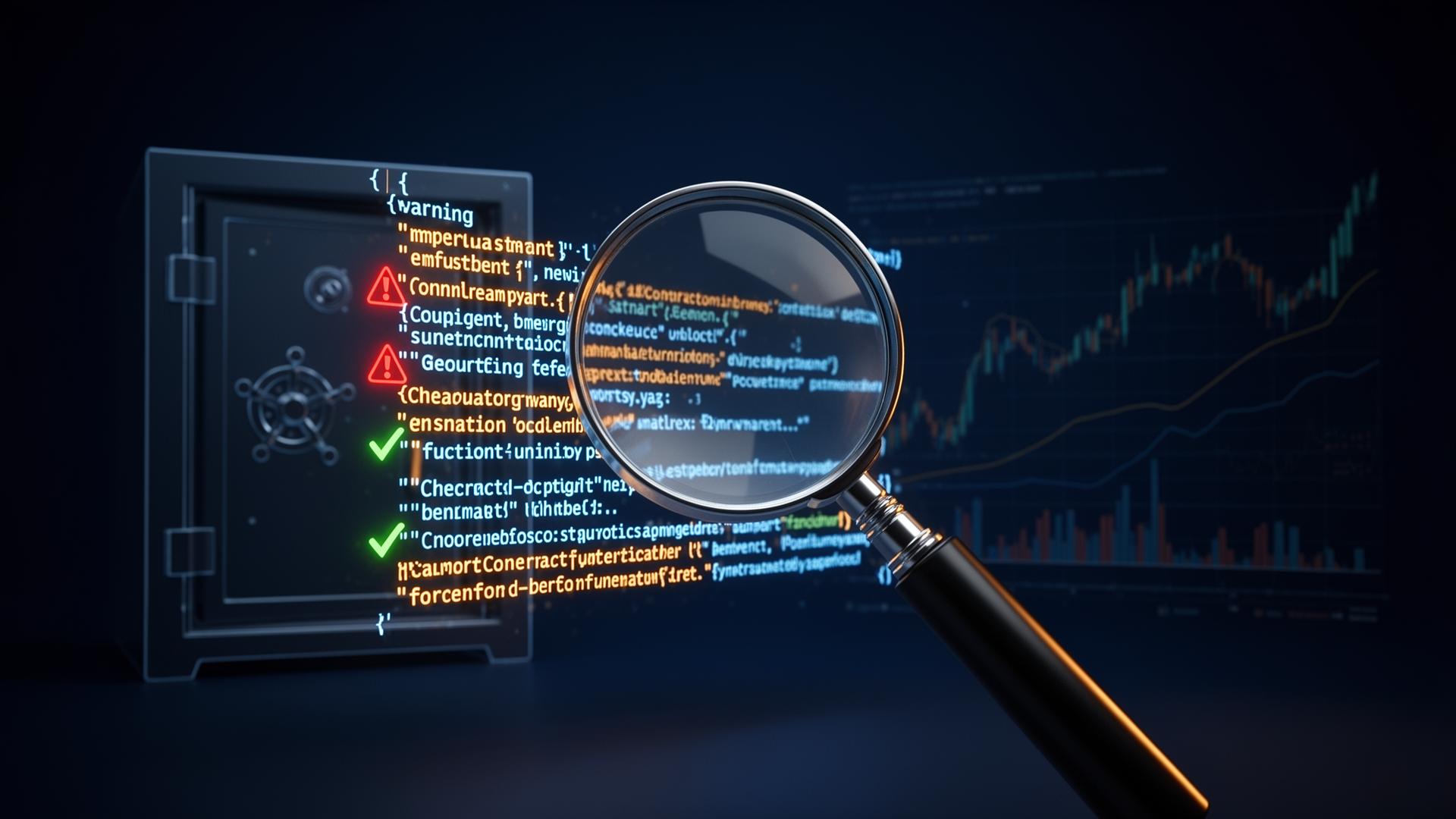
You don't need to be a Solidity developer to do basic due diligence. You need to know what to look for, and most of it takes minutes.
1. Is the contract verified on the explorer?
Open the contract address on a block explorer — Etherscan, BscScan, Arbiscan. There should be a "Contract" tab with green ticks and readable source code. If all you see is raw bytecode, walk away. Verified source is the bare minimum, not a gold star.
2. Is it a proxy?
Many contracts are proxies that point at a separate "implementation" contract. That's normal and often sensible — but it means the implementation can be swapped. Check whether there's a timelock and who actually controls upgrades.
3. Who is the owner or admin?
Most contracts have privileged roles. Find them. Are they renounced? Is it a multisig? A single externally owned account with admin powers is a red flag, because it means one compromised key can change the rules.
4. Has it been audited?
Search the project's docs for an audit report. Names that mean something: Trail of Bits, OpenZeppelin, ConsenSys Diligence, Spearbit, Cantina, Code4rena. Don't stop at "it was audited" — open the report, read the high and critical findings, and check they were actually fixed. The patterns these firms look for are the same ones documented in the OpenZeppelin Contracts library, which is worth a skim if you want to see what secure building blocks are supposed to look like.
5. How long has it been live?
Time on-chain is a kind of testing money can't buy. A contract that's held $50M for two years is a very different proposition from one deployed last Tuesday with a slick website.
6. What does the approval ask for?
When the wallet pop-up appears, read it. Token, spender, amount. If anything looks off — wrong token, infinite amount, a spender address that doesn't match the docs — reject it. The pop-up you skim is the one that costs you.
7. Is there a kill switch?
Some contracts let admins pause everything. Sometimes that's a feature — an emergency pause during an exploit can save the day. Sometimes it's a trap — an operator who can freeze your withdrawals at will. Find out which one you're dealing with before you commit funds.
The risks nobody mentions in the marketing
Smart contracts are powerful. They are not magic, and the marketing tends to skip the parts where they fail. Here are the failure modes that actually matter, with no sugar on them.
Bug risk
A logic bug can empty a contract in seconds. The 2022–2024 period was full of examples — flash-loan exploits, reentrancy, oracle manipulation, signature replay. Audits reduce the odds. Time on-chain reduces them further. Neither gets you to zero.
Approval-drainer risk
You signed an unlimited approval six months ago and moved on. The project gets exploited. Your wallet empties. This one is almost entirely preventable: sweep your old approvals with a tool like Revoke.cash once a month and the attack surface mostly disappears.
Oracle risk
Trading contracts usually rely on price feeds. If the oracle can be manipulated, the contract can be tricked into mispricing trades, and an attacker walks away with the difference. We get into the mechanics in our DeFi protocol risk guide.
MEV / sandwich risk
On public mempools, a big trade can be spotted and "sandwiched" by bots that buy in front of you and sell into your order, leaving you a worse price. Slippage limits, private RPCs, and aggregators with MEV protection are the usual defences.
Front-end vs contract risk
The contract can be flawless while the website serving it is hacked. A compromised front-end can quietly swap the real contract address for an attacker's, and you sign without noticing. Always check the address against the official docs, not the link someone DM'd you.
Upgrade risk
If a contract is upgradeable and the admin keys get compromised, a malicious version can be pushed live. Timelocks and multisigs shrink this risk — they don't erase it.
Smart contracts in practice — by trading use case
Different products, same building blocks. Once you see the pattern, the whole space gets less intimidating.
DEXs (Uniswap, Curve, PancakeSwap)
Decentralised exchanges are automated market makers. You swap by sending tokens to a pool contract, which calculates the output from a formula. No order book, no counterparty waiting on the other side — just maths and liquidity.
Lending (Aave, Compound, Morpho)
You deposit collateral and the contract lets you borrow against it. Interest accrues every block. Liquidations fire automatically when your position's health drops too far, with no warning call from a manager. See our DeFi lending real yield guide for how to tell genuine yield from the dressed-up kind.
Yield farming
You provide liquidity to a pool, receive an LP token, stake that LP token in a farm contract, and earn rewards. Each of those steps is its own contract, its own approval, and its own risk. The returns can look great; the stacked approvals are where people get caught out.
Perpetuals (GMX, dYdX, Hyperliquid)
On-chain leverage. Position contracts hold your margin, mark it to market continuously, and liquidate automatically when it's underwater. The contract is the exchange — there's no desk to call when a position goes against you.
Non-custodial trading bots
The contract holds an approval, not your funds. The bot calls the contract; the contract executes strictly inside the rules you signed. It's the cleanest architecture in active trading, because the worst case is bounded by your approval rather than by someone else's honesty. We use Aurum Neyro — see our full Aurum Foundation review for the detail, including where we'd want to see more.
Real-world example
See a non-custodial trading contract in action
Aurum Neyro is an AI trading agent built around the approve-and-execute pattern described above. Funds never leave your wallet. The contract enforces the limits you sign.
Sign up to Aurum — target ~15% monthly →Wallet hygiene: the human side of contract safety
The best contract in the world won't save you from sloppy wallet habits. Most losses we see aren't clever exploits — they're people skipping the basics.
- Use a hardware wallet for anything that matters. Our hardware wallets buyer's guide covers what's worth buying.
- Use a separate hot wallet for experiments. Never sign approvals from the wallet that holds your savings.
- Revoke regularly. Once a month, clear out your old approvals. Ten minutes, and it kills off the drainer risk above.
- Verify URLs. Bookmark the official sites and use the bookmark. Phishing clones look identical down to the pixel.
- Read every prompt. If you don't understand what you're being asked to sign, that's your answer — don't sign it.
If that list feels dull, good. Dull is what keeps your funds where they are. The trading is the interesting part; the hygiene is the part that lets you keep what the trading earns.
Frequently asked questions
Can a smart contract be changed after deployment?
Only if it was deployed as upgradeable. Plenty of contracts are immutable on purpose — what's deployed is what runs, forever. Always check which kind you're dealing with rather than assuming.
Are audited contracts safe?
Safer, not safe. Audits catch known patterns and they're well worth having. They also miss novel bugs that nobody's seen yet. Treat an audit as a floor you'd want a project to clear, not a guarantee you can switch your brain off.
What's the difference between a smart contract wallet and a regular wallet?
A regular wallet is a key pair — one key controls everything. A smart contract wallet, like Safe, is itself a contract, so you can program it with multisig rules, daily limits, and recovery options. We go through the features worth having in top crypto wallet features.
Why does signing cost gas?
Because you're broadcasting a transaction that validators have to process and record. Reading from the chain is free. Writing to it costs gas, because you're asking the whole network to remember what you did.
Can I get scammed even on a verified contract?
Yes, and it's worth sitting with that. The contract can be honest while the front-end serving it, the token you're approving, or the project's intentions are not. The contract is one layer of the stack. Verify all of them.
How do I learn to read Solidity?
Start by opening verified contracts on Etherscan with the comments on and reading along. CryptoZombies and the OpenZeppelin documentation are the gentlest places to begin if you want something more structured.
What it all comes down to
Smart contracts are the engine under modern crypto trading. They replace trust with code, and that code is auditable, public, and final.
None of that makes every contract safe. What it means is that the safety is checkable. You can read the source, inspect the approvals, follow the on-chain history, and decide for yourself — which is a different world from being asked to trust a logo and a Telegram channel.
So if you keep one habit from this guide, make it this: read the approval before you sign. That single five-second discipline prevents most of the self-custody losses we see. It's not glamorous. It works.
Keep reading
- Non-custodial AI trading bots: how they work & why your funds stay safe
- Aurum EX Bot Review: how the daily yield bot actually works
- Crypto trading bot audit: a step-by-step guide
- DeFi lending in 2026: real yield vs ponzi yield
- Layer 1 vs Layer 2: a practical safety guide
- Hardware wallets in 2026: the honest buyer's guide
- Browse all DeFi reviews
This article is educational, not financial advice. Smart contracts are powerful but unforgiving — verify before you sign, and never connect a wallet you can't afford to lose access to.
Deeper Dive
Non-custodial smart contract trading, explained end-to-end
Our long-form pillar guide on how bots can trade your wallet without ever holding your funds — the architecture, the safety wins, the audit checklist, and the real-world example to study first.
Read the full guide →Disclaimer
This content is for informational purposes only and does not constitute financial advice. Always do your own research.
Related guides
Non-Custodial Smart Contract Trading: How Bots Can Trade Your Crypto Without Ever Touching It
A plain-English guide to non-custodial smart contract trading: how bots can execute strategies on your wallet without holding your funds, why it's structurally safer than custodial yield platforms, and what to verify before you connect.
AI FinanceNon-Custodial AI Trading Bots: How They Work & Why Your Funds Stay Safe
A plain-English guide to non-custodial AI trading bots: how an AI agent can trade from your wallet without ever being able to withdraw your funds, why the architecture matters, the risks that don't go away, and how to vet one before you connect.
AI FinanceAURUM Neyro Quantum Alpha: The Complete 11-Step Setup Guide for Self-Custody AI Trading
A plain, step-by-step look at AURUM Neyro's Quantum Alpha agent: how self-custody AI crypto trading is meant to work, the 11 screens you'll actually see, the 70/30 split and commission tiers, and an honest read on what's verified versus what's just claimed.
AI FinanceWhat is AI Finance in Crypto? A Plain-English Guide
AI finance in crypto means using machine learning to automate trading, yield or research. Here's what each type actually does, where the real risk sits, and how to tell a genuine model from marketing.
AI FinanceIs AI Crypto Trading a Scam? An Honest 2026 Guide
Is AI crypto trading a scam, or a real tool? The honest answer, the red flags that give the frauds away, what a legitimate setup looks like, and how to check one before you risk a penny.
AI FinanceWhat Is a Decentralized Exchange? DEX Explained (2026)
What is a decentralized exchange, in plain English. We explain how DEXs work, what an AMM and a liquidity pool actually do, which platforms matter in 2026, the risks the marketing skips, and where non-custodial AI bots like Aurum fit — without you ever handing over your keys.