What Is a Decentralized Exchange? DEX Explained (2026)

By Danny Allan
Founder & lead analyst, CryptoWatchdog · former Complaints Manager at Crypto.com
26 April 2026· Updated 18 June 2026
What is a decentralized exchange (DEX)?
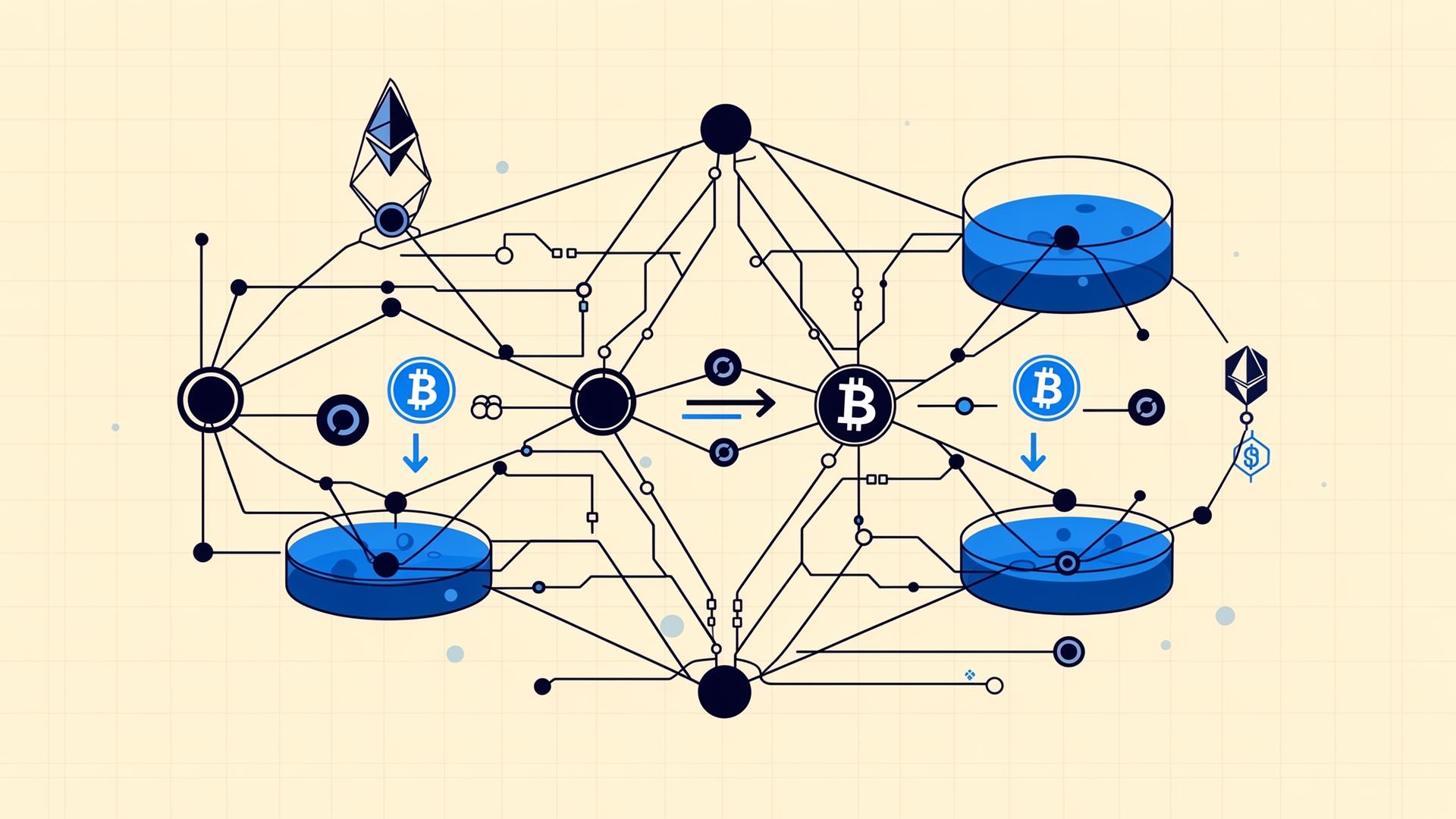
A decentralized exchange (DEX) is a place to swap one crypto token for another straight from your own wallet, without ever handing your money to a company. There's no broker holding your funds and no order book run by people in an office. There's code. Smart contracts sitting on a blockchain match the two sides of a trade and settle it automatically.
That one design choice is the whole story. On a centralized exchange like Binance or Coinbase, the moment you deposit, your coins live in the exchange's wallet. You're trusting them to stay solvent and to give your money back when you ask. On a DEX like Uniswap, PancakeSwap or Curve, your coins stay in your wallet right up until the second a swap settles on-chain. Nobody can freeze them, lend them out, or lose them in a bankruptcy, because nobody else is holding them.
We've spent a lot of time at Crypto Watchdog pulling apart platforms that got the custody question wrong, and it's nearly always the same lesson. When someone else holds your keys, you're betting on their honesty and their competence. A DEX takes that bet off the table and hands you a different one: now you're responsible. That swap of responsibility is the thing to understand before anything else, so we'll keep coming back to it.
If you're new to all this, our beginner's guide to non-custodial wallets covers why "self-custody" is the foundation that makes DEX trading possible at all. Read that first if the phrase "your keys" doesn't mean much to you yet.
How a DEX actually works
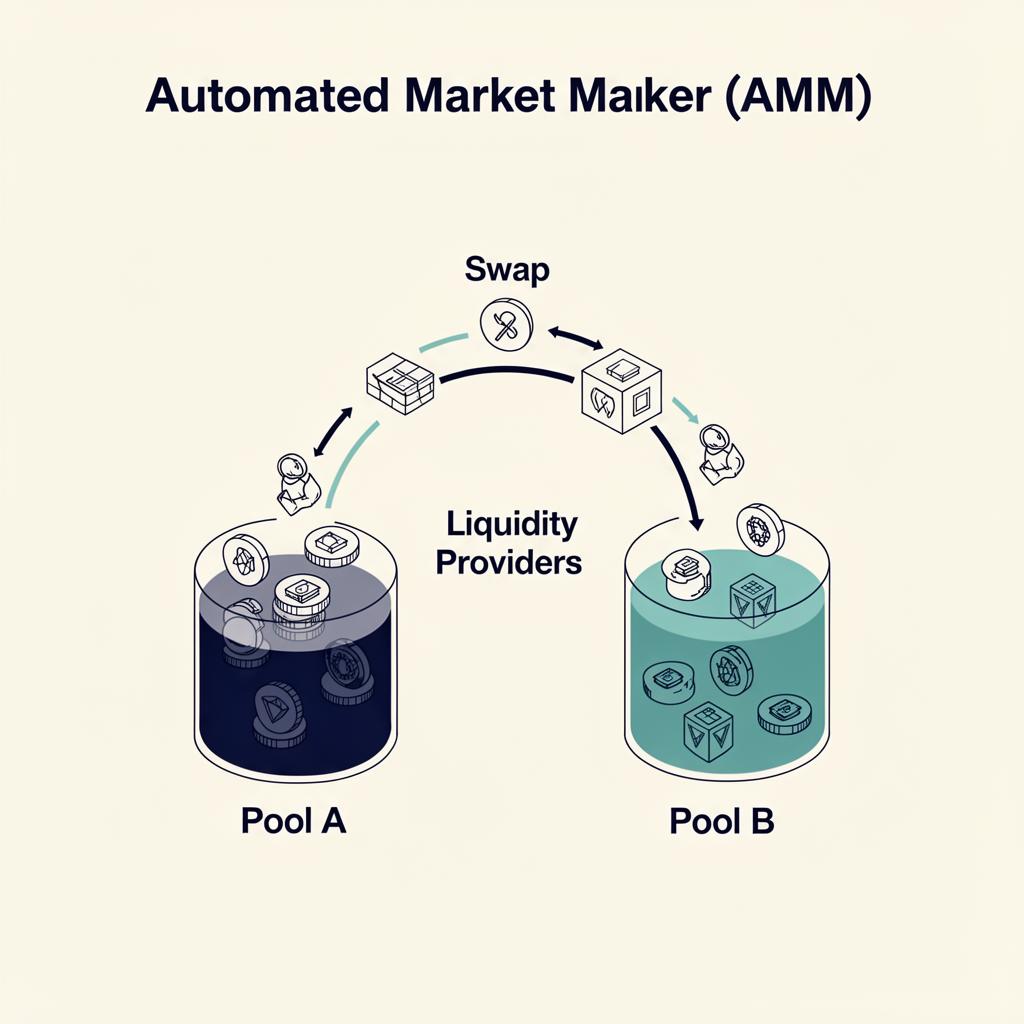
Most DEXs you'll meet run on the Automated Market Maker (AMM) model. Forget the traditional picture of buyers and sellers posting orders and waiting for a match. There's no order book and no human market maker. Instead there are liquidity pools: big shared piles of two tokens (say USDT and BNB), supplied by other users. A formula reads the ratio of the two tokens in the pool and that ratio sets the price.
When you swap, the smart contract takes the token you're spending, drops it into the pool, and sends you the other token out of the pool. The pool's balance shifts, the price moves a fraction, and the trade is final the instant the block confirms. No "pending", no settlement window, no support ticket. It either happens on-chain or it doesn't happen.
That immediacy is part of the appeal and part of the danger. There's no undo button on a blockchain. A swap you regret is a swap you keep.
The four moving parts of a DEX
You only really need to understand four pieces to follow what's going on under the hood:
- Smart contracts — the code that holds the funds and runs the swaps. Once deployed it usually can't be quietly changed, which is a strength and, when the code is buggy, a problem.
- Liquidity pools — the token reserves. They're stocked by liquidity providers (LPs), ordinary users who deposit a pair of tokens and earn a slice of every trading fee in return.
- The pricing formula — most often the constant-product rule, written
x * y = k. It's the maths that keeps a pool balanced and decides how much the price slides when someone trades against it. - Your wallet — MetaMask, Trust Wallet, Rabby or any other Web3 wallet. It's what signs the transaction and proves the trade is yours.
There's no sign-up form, no KYC, no withdrawal limit, no waiting on a verification email. If you've got a wallet and a small amount of the network's gas token (ETH on Ethereum, BNB on BNB Smart Chain, SOL on Solana to pay the fee), you can trade. That's it. Freedom and zero hand-holding, in equal measure.
DEX vs centralized exchange (CEX)
Here's the honest side-by-side. Neither column is "the winner" — they're different deals for different people.
| Feature | DEX | CEX |
|---|---|---|
| Custody of funds | You hold your keys | Exchange holds your keys |
| KYC required | No | Yes |
| Token listings | Permissionless, instant | Curated, slow |
| Counterparty risk | Smart-contract risk | Company risk (insolvency, hacks, freezes) |
| Fiat on-ramp | Limited / none | Built-in |
| Speed & UX | Slower, more clicks | Fast, polished |
| Fees | Network gas + small swap fee | Maker/taker fees + spread |
The trade-off comes down to one question: who do you trust less, code or a company? A CEX is convenient, beginner-friendly and easy to top up with a bank card, but you're trusting the firm to stay upright. A DEX is open to anyone and answers to no gatekeeper, but the safety of your seed phrase and your own due diligence are now your job, not theirs. Before you connect a wallet to anything you don't recognise, run through our scam-spotting checklist.
The biggest DEXs in 2026 (and what they're known for)
The space isn't one giant exchange; it's a handful of big ones, each tuned for a different crowd. Here's a quick map of who's used for what.
| DEX | Main chain | Known for |
|---|---|---|
| Uniswap | Ethereum (and L2s) | The original AMM; deepest liquidity for blue-chip ERC-20 pairs |
| PancakeSwap | BNB Smart Chain (BEP-20) | The dominant BSC DEX; lower fees, faster blocks |
| Curve Finance | Ethereum | Stablecoin-to-stablecoin swaps with minimal slippage |
| Raydium / Jupiter | Solana | Ultra-low fees; Jupiter routes across pools as an aggregator |
| dYdX / GMX / Hyperliquid | Various | Decentralized perpetuals — leveraged trading, no central broker |
Different badges, same machine underneath. Every one of them leans on the same core ideas — smart contracts, liquidity pools, a wallet signature — and then specialises. Uniswap is the deep, dependable default. PancakeSwap is the cheap-and-cheerful BSC workhorse. Curve is the quiet specialist for swapping one stablecoin for another without bleeding value. The Solana names are built for speed and tiny fees. The perpetuals platforms are for leverage, which is a louder, riskier game entirely.
Why traders are moving to DEXs
The drift toward DEXs isn't hype, it's a few concrete advantages that add up:
- Self-custody. No exchange can freeze, delay, or vaporise your funds in a collapse. After watching enough centralized venues fail, a lot of people decided they'd rather hold their own keys.
- Permissionless listings. A new token can trade on a DEX the moment liquidity is added, often days or weeks before any centralized exchange touches it. Good for early access. Also good for scammers, so read on.
- Composability. A DEX position can plug into the rest of DeFi — used as collateral for lending, yield or options. The pieces snap together.
- Privacy. No email, no ID, no proof of address sitting in someone's leaky database.
- Global access. Anyone with an internet connection can use it, wherever they happen to be.
We won't pretend that list is the whole picture, though. Every one of those upsides has a matching downside, which is exactly where the marketing tends to go quiet.
The risks nobody mentions in the marketing
DEX trading is not safe by default, and anyone telling you otherwise is selling something. Be honest with yourself about these before you put real money in:
- Smart-contract bugs. Even audited contracts have been drained. An audit lowers the odds; it doesn't remove them. Stick to protocols that have survived years and serious volume.
- Impermanent loss. If you provide liquidity and the two tokens move apart in price, you can end up worse off than if you'd simply held them. The name undersells how permanent the loss can feel.
- Slippage. On thin, illiquid pairs the price you actually get can be far worse than the price you were quoted. Set a slippage limit and respect it.
- MEV and sandwich attacks. Bots watch the pending transactions and can squeeze in front of your trade to profit off it. Tight slippage limits and a private RPC endpoint cut the risk.
- Rug pulls. Anyone can create and list a token. Plenty are built to be drained the moment enough people buy in. Always verify the contract on a token checker before you go near it.
- Phishing dApps. Fake Uniswap clones empty wallets every single day. The site looks identical; the contract behind the "Connect" button is not. Bookmark the real URL and only ever use the bookmark.
And one rule that's saved more people than any other: if a project promises "guaranteed daily returns" from a DEX, walk away. That isn't how AMMs work. A pool earns fees from trading volume, which goes up and down. Anyone guaranteeing a fixed daily number is either confused or lying, and neither is worth your money.
Where AI trading bots fit in
Manual swapping is fine for the occasional trade. It just doesn't scale to anything serious. You can't watch charts around the clock, you miss moves while you're asleep, and — speaking from experience — your own emotions are usually the worst trader in the room.
That gap is what AI trading bots are built to fill. A good one connects to your wallet, watches on-chain price action across DEXs, and executes swaps to a defined strategy. The part that matters most: it does all of that without ever taking custody of your funds.

When we assess one of these tools, three properties separate the credible from the dangerous:
- Non-custodial. You keep your seed phrase. The bot gets permission to trade, not to withdraw your money to some address you've never seen.
- Transparent strategy. The rules are defined and checkable on-chain, not hidden behind "proprietary AI" hand-waving.
- A real audit trail. Every trade is a public on-chain transaction you can verify yourself, with your own eyes, on a block explorer.
If a bot can't tick all three, we don't trust it, and neither should you. We dig into the wider category in non-custodial AI trading bots explained.
Aurum — a non-custodial DEX trading bot we've audited
Of the AI trading platforms we've put under the microscope at Crypto Watchdog, Aurum Foundation is the most credible non-custodial DEX bot we've found operating at this scale. It runs two flagship agents — EX-AI Bot and Neyro Quantum — that trade directly from your own DeFi wallet on BNB Smart Chain.
Why it's worth a DEX trader's attention:
- You keep custody. Aurum's smart contract is granted a trade-only permission. It cannot move your funds off-chain. That's the line we care about most, and Aurum stays on the right side of it.
- It targets roughly 15% monthly by running automated strategies across BSC liquidity pools. A target is not a promise — we'll say that more than once — but the on-chain history is there to verify rather than take on faith.
- No KYC, no broker. Sign up, connect a wallet, fund it, and the agent runs while you sleep.
- One annual licence fee ($25). No profit share skimmed off the top, no hidden spread, no lock on your withdrawals.
For the full structural breakdown, read our Aurum Foundation review, the step-by-step EX-AI Bot guide, and the Neyro Quantum launch deep-dive. We'd rather you read the detail than trust a summary.
How to get started with DEX trading (the safe way)
If you're going to do this, do it in an order that protects you. Here's the sequence we'd give a friend who asked.
- Set up a non-custodial wallet. MetaMask or Trust Wallet are the standards. Write the seed phrase on paper. Never a screenshot, never a note in your phone, never a message to yourself.
- Fund it with the network's gas token. BNB for BSC, ETH for Ethereum, SOL for Solana. Without gas, nothing moves.
- Bridge or buy stablecoins. USDT or USDC are the universal trading pair on most DEXs.
- Start with a small swap. Twenty dollars on the real network teaches you more than a week of YouTube tutorials. Real fees, real slippage, real confirmation screen.
- Verify every contract address. Use our token checker before you approve any new token. A thirty-second check beats a drained wallet.
- Bookmark the official DEX URL. Then only ever arrive via the bookmark. Never click a DEX link from a Telegram group or a Twitter ad.
- Consider an AI agent for hands-off execution. Once the basics click, a non-custodial bot like Aurum can run the strategy so you don't have to live on the charts.
Frequently asked questions
Are DEXs safer than centralized exchanges?
They remove company risk — the FTX-style collapse where the firm holding your money implodes — but they add smart-contract risk, the chance the code itself gets exploited. For long-term holdings, self-custody on a hardware wallet is generally safer than leaving coins on any exchange. For active trading, the right answer depends on your skill level and how comfortable you are being your own security team.
Do I pay tax on DEX trades?
In most places, yes. Every swap is typically a taxable event. Keep records as you go. The blockchain is public and permanent, so assume tax authorities can see exactly what you did, because they often can.
Can I use a DEX without a VPN?
Yes. DEXs don't enforce geo-blocks at the protocol level. Some front-end websites do block certain regions, but the underlying contracts don't care where you are.
What is the cheapest DEX to use?
On a per-transaction basis, Solana and BNB Smart Chain DEXs cost cents. Ethereum mainnet can run anywhere from a few dollars to fifty per swap depending on congestion. Layer-2 networks (Arbitrum, Base, Optimism) sit in the middle — Ethereum security, far smaller fees.
Is Aurum a DEX itself?
No. Aurum is an AI trading agent that uses DEXs (mainly on BNB Smart Chain) to run strategies on your behalf. Your funds stay in your wallet; the bot just signs swaps according to its rules. Think of it as a driver, not the road.
How to set up Aurum's DEX trading bot (step-by-step)
If you'd rather automate your DEX trading than babysit charts, here's the exact flow we use to launch Aurum's EX-AI Bot and Neyro Quantum agents on BNB Smart Chain. The whole thing takes about ten minutes.
Step 1 — Create your Aurum account
Sign up using our affiliate link below. There's no KYC — just an email and a password.
Affiliate link. Educational content, not financial advice.
Step 2 — Pay the $25 annual licence fee
Inside the dashboard, top up your Aurum balance with at least $25 in USDT to activate the platform for 12 months. It's a one-off licence, not a profit share, and there are no withdrawal fees stacked on top.
Step 3 — Fund the EX-AI Bot ($100 minimum)
From the menu bar, open Financial Proposals → EX-AI Bot → Fund Bot. The minimum allocation is $100 USDT. Pick a package, confirm, and the agent starts trading on BSC liquidity pools right away.
Want the picture-by-picture version? See our full EX-AI Bot setup guide.
Step 4 — Or connect a DeFi wallet for Neyro Quantum
For the Neyro Quantum agent, you keep your funds in your own wallet (MetaMask, Trust Wallet, and the like) and grant a trade-only permission. The settings that matter:
- Network: BNB Smart Chain (BEP-20)
- Gas token: keep a small amount of BNB on hand for transaction fees
- Trading pair: USDT (don't send other stablecoins)
Then go to Financial Proposals → Neyro Quantum → Connect Wallet, sign the approval, and allocate your USDT. Full walkthrough here: Aurum Neyro Quantum launch guide.
Step 5 — Monitor on-chain
Every trade the bot makes is a public transaction. Drop your wallet address into BscScan and check the activity yourself. That's the entire point of non-custodial smart-contract trading: trust the chain, not the company. If you can't verify it, don't assume it.
Affiliate link. Educational content, not financial advice.
Watchdog note: Targets like ~15% monthly are targets, not promises. Crypto markets can and do turn against any strategy. Start with the minimum, watch the live results for 30 days, and only scale up once you've seen the drawdowns and made peace with them.
Bottom line
DEXs aren't the experimental fringe of crypto any more. They settle billions in volume a day, list new tokens before any centralized venue, and give you the one thing a CEX structurally can't: real ownership of your funds.
That ownership comes with homework. Manual DEX trading rewards patience and discipline, and it punishes the lazy. If you'd rather automate the grind without giving up custody, a vetted bot like Aurum's EX-AI / Neyro agents is the most credible path we've found so far. Notice "so far" — we keep auditing, and we'll change our minds if the evidence does.
Whatever you choose, the basics don't change: bookmark the real URL, verify every contract, never share your seed phrase, and start small. The people who lose money on DEXs almost always skipped one of those four.
Featured DEX trading agent
Aurum EX-AI & Neyro — non-custodial AI bots that trade on DEXs for you.
Sign up to Aurum — target ~15% monthly →Educational content. Not financial advice. Crypto is volatile — never invest more than you can afford to lose.
Keep learning
- Non-custodial AI trading bots explained
- Aurum EX-AI Bot — how it works step by step
- Aurum Neyro Quantum alpha launch
- How smart contracts work in crypto trading
- Aurum Foundation full review
Related reading: If you want a way to spend crypto without handing your keys to an exchange, see our TrustCard pre-beta review — the first decentralized, no-KYC debit card we are testing.
Related reading: Looking for a card that ships today? Read our Tangem Pay 2026 review — the most self-custodial Visa debit card actually live in 42 countries.
Disclaimer
This content is for informational purposes only and does not constitute financial advice. Always do your own research.
Related guides
Non-Custodial AI Trading Agents: What Aurum's NEYRO Is, and How to Judge It
Aurum's NEYRO is pitched as a non-custodial AI trading agent that never touches your keys. We explain what that actually means, where the real risks sit, and how to evaluate it — including the regulator warnings against the wider Aurum brand that anyone reading the marketing deck deserves to see first.
AI FinanceNon-Custodial Smart Contract Trading: How Bots Can Trade Your Crypto Without Ever Touching It
A plain-English guide to non-custodial smart contract trading: how bots can execute strategies on your wallet without holding your funds, why it's structurally safer than custodial yield platforms, and what to verify before you connect.
AI FinanceNon-Custodial AI Trading Bots: How They Work & Why Your Funds Stay Safe
A plain-English guide to non-custodial AI trading bots: how an AI agent can trade from your wallet without ever being able to withdraw your funds, why the architecture matters, the risks that don't go away, and how to vet one before you connect.
AI FinanceReal-World Asset Tokenization 2026: Gold, Silver & Real Estate
What tokenized gold, silver and real estate actually are, why the sector is growing, how to buy without getting burned, the risks the marketing skips, and the platforms worth knowing (PAXG, XAUT, Kinesis, RealT, Lofty).
AI FinanceCopy AI Trading Explained (2026): How It Works, Best Platforms & The Risks Nobody Mentions
A calm, practical look at copy trading AI in 2026: how it actually works under the hood, the three platform types (exchange copy, funded prop, non-custodial AI), how to size your risk, the leaderboard traps that quietly drain accounts, and a beginner-safe setup you can follow step by step.
AI FinanceWhat is AI Finance in Crypto? A Plain-English Guide
AI finance in crypto means using machine learning to automate trading, yield or research. Here's what each type actually does, where the real risk sits, and how to tell a genuine model from marketing.