The $RAVE Collapse: How a Binance-Listed Token Wiped Out $5.7B in 24 Hours

By Danny Allan
Founder & lead analyst, CryptoWatchdog · former Complaints Manager at Crypto.com
21 April 2026· Updated 17 June 2026
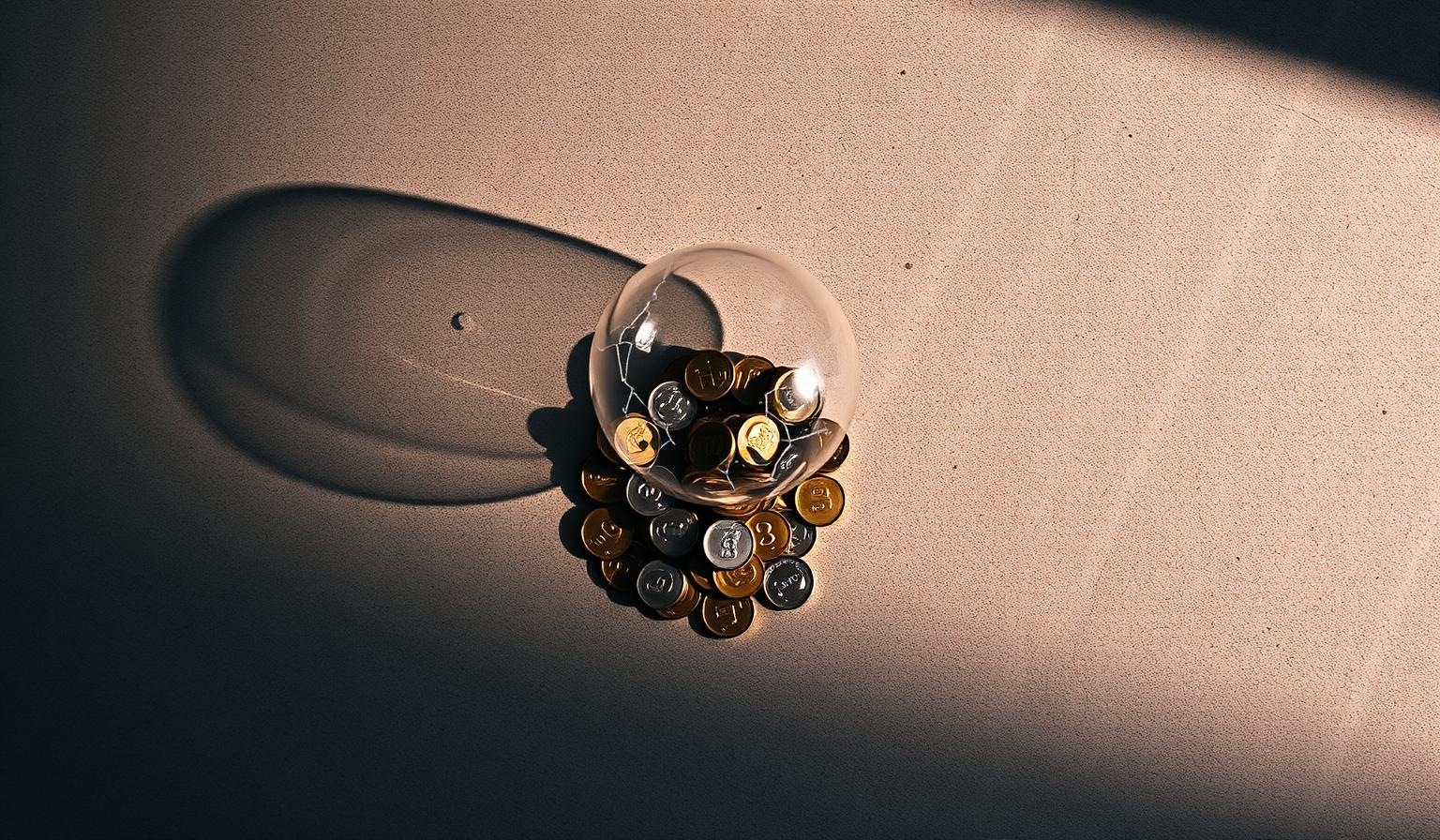
In April 2026, a token called $RAVE surged more than 10,000% in a little over a week, then collapsed roughly 90% in a single day. According to CoinDesk, the crash erased around $5.7 billion in market value and prompted Binance and Bitget to open investigations into how the rally happened.
For thousands of retail traders, the most painful detail was not the size of the loss. It was the assumption underneath it: that a listing on a top-tier exchange meant somebody had already vetted the token.
This article walks through what is actually verified, what remains alleged, and — most usefully — the low-float "market-maker" pattern that the RAVE episode appears to fit. The mechanics are not new. They have been described in plain terms by reputable analysts for years, and you can run the same on-chain checks they do in a few minutes.
A note on certainty. As of writing, the manipulation claims around RAVE are allegations raised by on-chain analysts and investigations announced by exchanges, not findings or charges. RaveDAO has publicly denied wrongdoing. We attribute every specific claim to a source and flag what is unproven.
What is actually known about RAVE
Here is the picture that reputable crypto press has reported. Treat the headline numbers as approximate — different outlets cite slightly different figures depending on the exact timestamp.
| Detail | What sources report |
|---|---|
| Peak price | Around $26–$28 at the top |
| Move to peak | Reported as roughly +10,000% over about 9–11 days |
| Crash | About -90% in 24 hours (some outlets cite ~95–98% from peak to trough) |
| Market value erased | Approximately $5.7 billion |
| Liquidations | Around $44 million reportedly tied to the move |
| Alleged supply concentration | About 90% of the 1B supply in three team-linked wallets (per ZachXBT) |
| Exchange response | Investigations announced by Binance, Bitget and Gate.io |
| Project response | RaveDAO denied involvement in the trading activity |
Sources for these figures include CoinDesk and reporting summarised by DL News on the exchange probes.
The central allegation
On-chain investigator ZachXBT alleged that roughly 90% of RAVE's one-billion-token supply sat in three team-linked wallets, and that large transfers from those wallets to exchanges preceded the parabolic price surge. That sequence — concentrated supply moving to exchanges just before a violent move — is the part that drew accusations of an insider-orchestrated pump-and-dump.
To be clear: that is an allegation supported by on-chain transaction data that analysts have pointed to publicly. It is what the exchanges say they are investigating. It is not, at the time of writing, a proven legal conclusion.
The project's response
RaveDAO, the entertainment-focused project behind the token, denied involvement in the trading activity. It indicated it might sell unlocked tokens to fund operations and explore future lockup models. Notably, reporting suggests the project did not directly rebut the specific on-chain claims or commit to concrete safeguards. We will update this article if the investigations produce findings.
How the low-float market-maker pattern works
Whatever the investigations ultimately conclude about RAVE specifically, the mechanics of this kind of collapse are well documented and worth understanding on their own. They explain why "trending" low-cap tokens can move so violently in both directions.
The pattern has four moving parts.
1. Concentrated supply and a tiny float
"Float" is the amount of a token actually available to trade. If insiders hold most of the supply and only a small slice circulates on exchanges, the market is thin. As TrendSpider's learning materials on pump-and-dump schemes explain for low-float assets generally, when very little is freely trading, even modest buying can produce outsized price moves.
- Less liquid supply means each buy order moves price further.
- A few hundred thousand dollars can shift a thin market by multiples.
- Charts look "parabolic" not because demand is real, but because there is almost nothing to absorb it.
2. Manufacturing the squeeze
A short squeeze happens when traders who bet on a falling price are forced to buy back the asset to close their positions, pushing the price even higher. The basics are described clearly in Bitget's explainer on short squeezes.
In a thin token, this becomes a weapon:
- Large holders can make it look like a dump is coming (visible sell pressure), baiting traders into shorting.
- With shorts crowded in, a relatively small amount of buying pushes price through liquidation clusters.
- Each forced liquidation triggers market buys, which trigger the next cluster — a cascade upward.
The result is a stair-step rally that feels unstoppable for a day or two.
3. The exit
At the top, concentrated holders have the only meaningful supply — and almost no one to sell to without crashing the price. Selling into thin liquidity is exactly how a "stair-step collapse" begins, the pattern the ChainCatcher analysis of the RAVE event describes as explosive growth, frantic squeezes, then a near-total wipeout in a very short window.
- Depth disappears from the order book.
- Late buyers become the exit liquidity.
- Liquidations now cascade downward, mirroring the way up.
4. The silence
In contested episodes, the public-relations playbook is often the same: deny, deflect to "market conditions" or "third-party market makers," and avoid the specific on-chain questions. That is why independent on-chain verification matters more than any statement a project issues.
Why a major-exchange listing is not a safety stamp
A lot of the RAVE damage flowed from a single, understandable assumption: it is on a big exchange, so it must be safe.
It is worth being precise about what a listing does and does not mean:
- A listing is a distribution channel. It makes a token easy to buy.
- Listing review focuses on the project and its paperwork, not on protecting you from a coordinated trading scheme that unfolds after listing.
- An exchange opening an investigation after the fact — as Binance, Bitget and Gate.io did here — is the system reacting to damage, not preventing it.
This is not an argument against using reputable exchanges. Where you trade still matters a great deal for custody, withdrawals and dispute handling — see our best crypto exchange UK 2026 guide and our independent reviews of Kraken and Bitget. The point is narrower: a listing tells you a token can be traded, not that it is safe to trade. Treat a brand-new low-cap listing with the same caution you would a random token on a decentralised exchange until you have done your own checks.
We are not suggesting any exchange endorsed or facilitated wrongdoing. The exchanges named here have stated they are investigating the activity.
A red-flag checklist you can run before you buy
These are general checks that apply to any low-cap token. Several of them map directly onto the concerns raised about RAVE. None of these tools or sites are affiliated with us, and none guarantee safety — they simply surface risk.
| Check | Where to look | Red flag |
|---|---|---|
| Holder concentration | Block explorer "Holders" tab (e.g. Etherscan, BscScan, Solscan) | A few non-exchange wallets hold a large share of supply |
| Liquidity depth | DEX analytics dashboards (e.g. DEXScreener, GeckoTerminal) | Thin depth relative to a very large market cap |
| Pair / token age | DEX analytics | Days old, yet already "trending" |
| Team identity | Project site, public profiles | Anonymous team or stock-photo bios |
| Token unlocks | Unlock trackers | Large cliff or unlock arriving soon |
| Perp funding rate | Derivatives data dashboards | Extreme funding can signal a crowded, squeeze-prone setup |
| Insider flow | On-chain analytics | Large holders moving tokens to exchanges before a move |
If several of these flash red at once, the cautious read is simple: the favourable trade belongs to the insiders, and a late buyer is the exit. When in doubt, the safest position size on an unknown low-cap is one you can afford to lose entirely — or zero.
Practical ways to protect yourself
You cannot stop manipulation from happening. You can control your exposure to it.
- Size for the risk, not the hype. A token that is a week old with a tiny float is not a blue chip. Position accordingly.
- Be skeptical of vertical charts. A move that looks too clean is often engineered to look that way.
- Read "everyone is short" as a warning, not an entry. Extreme one-sided positioning is the fuel a squeeze needs.
- Verify on-chain before you trust a narrative. Statements are cheap; transaction history is not.
- Mind where your assets live. If you do hold volatile tokens, understand the trade-off between exchange custody and self-custody in our self-custody vs custodial wallets guide, and keep long-term holdings off hot wallets — our best hardware wallet 2026: Ledger vs Trezor comparison walks through the options.
If you genuinely need cold storage for assets you intend to hold, a reputable hardware wallet such as a Ledger or Trezor device keeps your keys offline. That protects you from drainers and phishing — it does not protect you from buying a manipulated token, which is a separate risk entirely.
How RAVE fits a wider 2026 pattern
RAVE is not the only collapse to draw scrutiny this year. Across 2026 we have repeatedly seen the same shape: thin float, a fast vertical move, then a near-total round-trip — often followed by denials and, sometimes, investigations.
We track these episodes as they happen. Two recent examples worth reading for the pattern recognition:
- Our CryptoMine Pro scam warning breaks down how a polished front end masked an unsustainable model.
- Our YieldMax AI scam warning shows how "AI yield" branding is used to launder the same old promises.
The branding changes. The underlying ask — trust us, send money, do not look too closely — does not.
Frequently asked questions
What was the $RAVE token? RAVE was the token associated with RaveDAO, an entertainment-focused crypto project. In April 2026 it surged more than 10,000% before crashing, drawing investigations from major exchanges, as reported by CoinDesk.
How much money was lost in the RAVE collapse? CoinDesk reported that the crash erased roughly $5.7 billion in market value in about a day. On-chain analyst ZachXBT pointed to around $44 million in liquidations tied to the move. These are approximate figures and vary slightly by source and timestamp.
Is the RAVE collapse confirmed to be a scam? Not as a legal finding. On-chain analysts have alleged insider-orchestrated manipulation, and Binance, Bitget and Gate.io have announced investigations. RaveDAO has denied involvement in the trading activity. Until investigations conclude, these remain allegations rather than proven facts.
What is a low-float market-maker scheme? It is a pattern where most of a token's supply is held by insiders, leaving a tiny tradable float. Because the market is thin, modest buying can spike the price and trigger short squeezes; insiders can then sell into the resulting demand, collapsing the price. The general mechanics are explained in resources like Bitget's short-selling explainer and TrendSpider's pump-and-dump overview.
Does a Binance or Bitget listing mean a token is safe? No. A listing means a token can be traded on that venue. It is not a guarantee against manipulation, especially for new, thinly traded tokens. Exchange custody and dispute handling still matter — see our best crypto exchange UK 2026 guide — but a listing is not a safety certificate.
How can I check a token for these red flags myself? Use a block explorer to view holder concentration, a DEX analytics dashboard for liquidity and pair age, an unlock tracker for upcoming supply, and derivatives data for funding rates. If several signals look unhealthy at once, treat the token as high-risk and size accordingly — or stay out.
What should I do if I lost money on a token like RAVE? Be wary of anyone promising to "recover" your funds for a fee — recovery scams target victims of earlier losses. Document your transactions, report to the relevant exchange and authorities, and never pay an upfront fee to a stranger claiming they can retrieve your crypto.
Bottom line
The verified facts are stark enough on their own: a token surged more than 10,000%, collapsed roughly 90% in a day, wiped out around $5.7 billion, and triggered investigations by three major exchanges. The manipulation allegations are serious and credible enough for those exchanges to act, but they remain allegations for now.
The durable lesson does not depend on the verdict. Thin float plus crowded leverage plus concentrated supply is a recipe for violent moves in both directions. A major-exchange listing is a distribution channel, not protection. Your real edge is doing the on-chain checks before you click buy — and being honest with yourself about position size when a chart looks too good to be true.
Stay calm, stay small on unknowns, and verify before you trust.
This article reflects publicly reported information and on-chain allegations as of the update date above. It is not investment advice. We will revise it if the investigations into RAVE produce formal findings.
Disclaimer
This content is for informational purposes only and does not constitute financial advice. Always do your own research.
Related guides
Fake Ledger App Slipped Past Apple Review and Drained $9.5 Million in One Week
A counterfeit Ledger Live app sat on Apple's App Store for about a week in April 2026, tricked more than 50 people into typing their recovery phrases, and was linked to roughly $9.5 million in stolen crypto. Here is how it worked and how to be sure you are never the next victim.
Scam AlertThe New Wave of Crypto Scams: How to Spot and Stop Them in 2026
The 2026 playbook has changed. Deepfake founders, address poisoning, and fake wallet apps are draining people who'd never fall for a 2017 scam. Here's what's new, why it works, and how to shut it down.
Scam AlertCrypto Scammed? Your Step-by-Step Guide to Damage Control
If you have just been scammed in crypto, the next few hours matter. This calm, evidence-led playbook walks you through securing what is left, revoking malicious approvals, documenting the theft, reporting to Action Fraud and the FCA, and avoiding the recovery scammers who target victims a second time.
Scam AlertDon't Get Hooked: Your 2026 Guide to Crypto Phishing Attacks
Crypto phishing attacks in 2026 rarely ask for your seed phrase. They trick you into signing something. Here's how wallet drainers, permit phishing and EIP-7702 delegation scams work, with a plain plan to protect your funds.
Scam AlertBeyond Phishing: The Sophisticated Crypto Scams Draining Wallets This Week
The old advice was 'don't click dodgy links in your DMs'. That's no longer enough. Drainers now ride the top of Google search and a single signature can empty a wallet. Here's how the current wave actually works, and how to stay out of it.
Scam AlertAre Telegram Trading Bots Safe? A Crypto Watchdog Investigation
Telegram trading bots like Banana Gun, Maestro and Unibot promise speed, but they hold your keys and have a documented record of multi-million-dollar exploits. Here is the evidence, the real risks, and safer ways to trade.